Breakthrough YAP101 therapy advances to next phase following positive safety review
The Texas Heart Institute at Baylor College of Medicine (THI) announced today that the first cohort of patients in a landmark clinical trial investigating a gene therapy designed to regenerate damaged heart muscle has been successfully dosed at Baylor St. Luke’s Medical Center.
The Phase 1 SALVADOR-HF trial, sponsored by Medley Therapeutics, Inc. (formerly YAP Therapeutics), marks the first clinical investigation of a genetic medicine intended to induce endogenous cardiac regeneration. The investigational therapy, YAP101, is a first-in-class adeno-associated virus (AAV) genetic medicine designed to activate the heart’s own regenerative pathways. Following favorable safety findings in the initial cohort, the trial’s independent Safety Review Team has recommended advancement to the next dose level.
YAP101 was developed from foundational discoveries at The Texas Heart Institute at Baylor College of Medicine, where researchers have spent decades uncovering the molecular mechanisms that control heart muscle growth and repair.
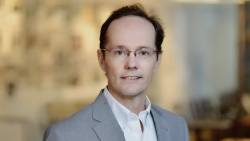 “Induction of endogenous regeneration of human heart muscle is the holy grail of modern medicine,” said James F. Martin, MD, PhD, Founder of Medley Therapeutics; Director, Cardiomyocyte Renewal Laboratory and the Vivian L. Smith Chair in Regenerative Medicine, BCM. “YAP101 is designed to unlock the heart’s own repair mechanism by transiently lifting the Hippo pathway ‘brake’ and activating YAP via shRNAs delivered directly to cardiomyocytes. We successfully regenerated cardiomyocytes in preclinical studies, and we are excited about the next step—healing the hearts of patients with limited treatment options.”
The investigational therapy works by using a cardiomyocyte-specific promoter to express short hairpin RNAs (shRNAs) that transiently suppress Hippo signaling and activate YAP—pathways known to stimulate cardiomyocyte renewal. The goal is to trigger controlled, self-limiting regeneration of heart muscle in patients with advanced ischemic heart failure with reduced ejection fraction (HFrEF).
 “Until now, there has not been a way to regenerate human heart tissue,” said Emerson Perin, MD, PhD, Medical Director, Medley Therapeutics, and Director, Center for Clinical Research, THI. “YAP101 offers new hope for patients with heart failure. Our aim is to enable the heart to repair itself and reverse heart failure through a brief cardiac catheterization procedure.”
The SALVADOR-HF trial will include three planned dose levels in a dose-escalation phase (target enrollment of 9–18 subjects), followed by a dose-expansion cohort of up to six additional participants.
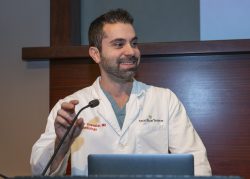 “Our early experience with YAP101 gives us reason to be encouraged,” said Alexander Postalian, MD, Principal Investigator of the SALVADOR-HF trial at The Texas Heart Institute at Baylor College of Medicine. “For decades, cardiologists have focused on managing the symptoms of heart failure, coming to uncomfortable terms with the fact that cardiac muscle cannot regenerate. With this novel approach, we are now investigating whether it’s possible to help the heart heal itself, addressing the primordial cause of heart failure.”
The Texas Heart Institute at Baylor College of Medicine has long been a global leader in advancing regenerative cardiovascular medicine—from the first artificial heart and stem cell therapies to today’s genetic medicine breakthroughs. The work of Dr. Martin and Dr. Perin continues this legacy of innovation, building on decades of scientific discovery at THI that have redefined the frontiers of heart repair and recovery.
Read Medley’s press release here.
Breakthrough Research in Single Ventricle Disease Provides Insights into Pediatric Heart Failure
Advancing the Science of Heart Regeneration
Dr. Juan Carlos Lopez-Mattei Advances National Cardiovascular Imaging Standards Through Landmark AHA and ACC Publications