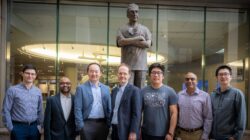

Breakthrough science often begins with asking difficult clinical questions. Recent research by Dr. James F. Martin, Director of the Cardiomyocyte Renewal and Gene Editing Laboratories at The Texas Heart Institute at Baylor College of Medicine, and his team was published in Nature Cardiovascular Research. The study, Ventricular assist device unloading reverses microvascular senescence in single ventricle disease, provides critical new insight into why the systemic right ventricle fails in children with hypoplastic left heart syndrome (HLHS), one of the most complex and life-threatening forms of congenital heart disease. This work reveals the power of collaboration across The Texas Heart Institute at Baylor College of Medicine, Baylor College of Medicine, and Texas Children’s Hospital, and reinforces our shared commitment to improving outcomes for patients with congenital heart disease.
Using advanced single-nucleus and spatial transcriptomic technologies, the research team analyzed heart tissue from pediatric patients with HLHS across stages of surgical care and heart failure progression. The study revealed widespread cellular senescence, often described as a form of biological aging, throughout the failing heart, particularly within microvascular regions. Importantly, the team demonstrated that ventricular assist device (VAD)–mediated mechanical unloading can partially reverse these senescence signals and restore healthier cellular states. These findings suggest that heart failure in single-ventricle disease is not simply irreversible deterioration but may involve biological processes that can be modified or reversed under the right conditions.
The research also showed that senescence affects multiple cell types, including cardiomyocytes, endothelial cells, fibroblasts, and immune cells, and that these cells organize into microvascular “niches” that reinforce dysfunction through inflammatory and stress-related signaling. By identifying microvascular senescence as a central driver of systemic right-ventricular failure, the study opens new pathways for future therapies to preserve heart function and improve long-term survival for children living with congenital heart disease.
“Understanding why the systemic right ventricle ultimately fails in children with single-ventricle physiology requires studying the biology of the human heart itself,” noted Dr. Martin. “By identifying reversible cellular pathways, we are beginning to see new possibilities for therapies that could change the long-term outlook for these patients.”
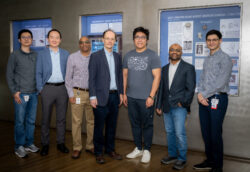 This study was led by Lin Liu, with contributions from Jeffrey D. Steimle, Chang-Ru Tsai, Fansen Meng, Yi Zhao, Sandra Carmichael, and Xiao Li, whose collective expertise drove this important discovery. We congratulate Dr. Martin, Dr. Liu, and the entire team on this important contribution to cardiovascular science. Their work reflects the legacy of discovery at The Texas Heart Institute at Baylor College of Medicine and our commitment to translating advanced research into meaningful progress for patients and families facing complex heart disease.

Visit U.S. News & World Report